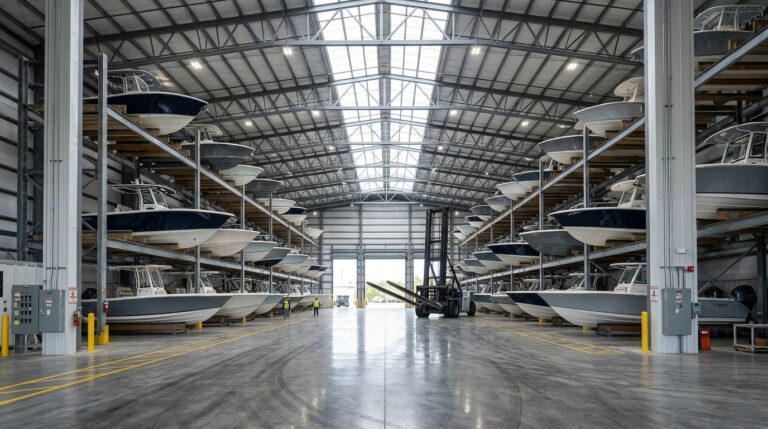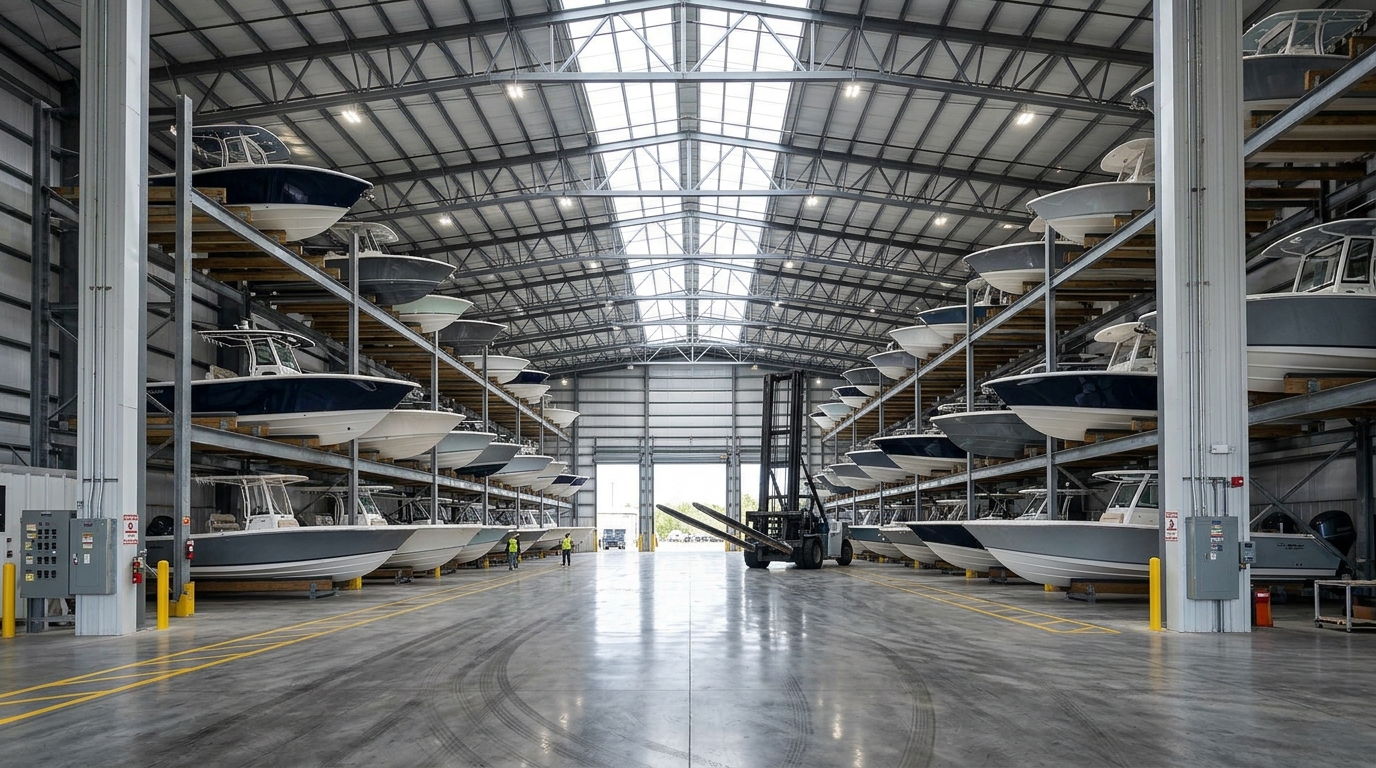
Understanding the full breakdown of outdoor boat storage cost is essential for recreational boaters seeking a budget-friendly way to park and protect their vessel during the off-season. While indoor climate-controlled facilities provide the ultimate protection against weather elements, commercial outdoor storage yards offer a significantly more economical solution, saving boat owners thousands of dollars each year.
Nationally across the United States in 2026, outdoor boat storage cost averages between $50 and $180 per month (or $300 to $1,100 for a standard 6-month winter storage contract). However, monthly rental fees represent only part of the equation; budgeting for protective shrink-wrapping, security locks, tire covers, and seasonal maintenance is vital to preventing expensive exterior gelcoat chalking and cockpit mold.
Outdoor Boat Storage Cost Comparison: Yard Types & Amenities
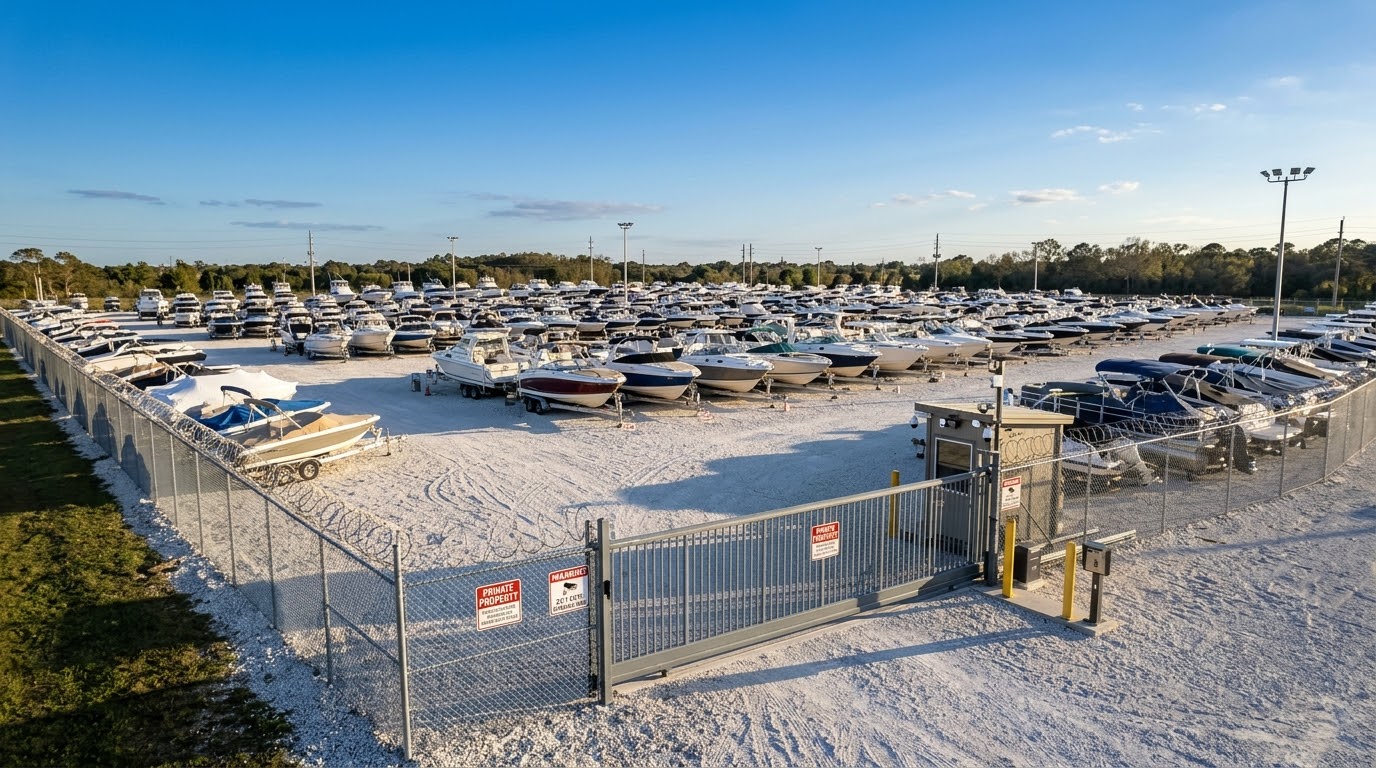
Commercial facilities categorize outdoor storage into distinct lot types, each offering different security infrastructure, surface paving, and pricing tiers for your monthly outdoor boat storage cost:
| Outdoor Storage Facility Type | Average Monthly Cost (20-26ft) | Ground Surface Material | Included Security & Access Amenities |
|---|---|---|---|
| Unpaved Rural Grass / Dirt Lot | $40 – $75 / mo | Dirt / grass field | Basic wire fence, padlock gate; high rodent and ground moisture exposure |
| Fenced Commercial Gravel Yard | $65 – $125 / mo | Compacted crushed stone / gravel | Keypad gate access, perimeter fencing, dusk-to-dawn security lights |
| Paved Marina Dry Lot / Asphalt | $100 – $180 / mo | Paved asphalt or concrete pad | 24/7 HD security surveillance cameras, washdown station, on-site boat ramp |
| Covered 3-Sided Canopy / Carport | $140 – $260 / mo | Concrete floor with roof | Overhead sun/rain shield; eliminates snow accumulation on covers |
When calculating your total outdoor boat storage cost, remember that professional facilities audited under standards established by the Association of Marina Industries (AMI) offer dedicated wash racks, power pedestals for battery maintenance, and recorded security surveillance that reduce insurance premiums.
Shrink Wrap vs. Reusable Heavy Canvas Tarps
Storing a boat outdoors without a proper, drum-tight cover is a recipe for disaster. Rain and melting snow pool on loose covers, stretching canvas until gallons of water collapse into the cockpit, rotting upholstery and soaking electrical panels. When factoring in the complete seasonal outdoor boat storage cost, consider these two primary covering methods:
1. Professional Marine Shrink-Wrapping ($12 to $18 per linear foot)
Professional shrink-wrap involves wrapping the boat in heavy 7-mil virgin polyethylene film, building an internal wooden 2×4 ridgepole framework, and heating the film with a propane heat torch until it shrinks into a seamless, drum-tight shell. Snow and ice slide off immediately. Ensure the installer installs at least four weatherproof louvered vents and hangable moisture-absorbing desiccant bags inside to prevent winter condensation mold.
2. Custom Fitted Reusable Marine Canvas ($800 – $1,600 initial investment)
While custom breathable Sunbrella canvas covers carry a higher initial purchase price, they last 7 to 10 years. Over a 5-year ownership period, a quality reusable cover cuts recurring winterizing expenses dramatically, reducing your net outdoor boat storage cost compared to paying for annual disposable shrink-wrap year after year.
Outdoor Boat Security & Trailer Defense
Because outdoor parking lots are accessible to open air, taking active theft-prevention steps is paramount:
- Heavy-Duty Coupler Locks: Standard brass padlocks can be severed in seconds with bolt cutters. Install a hardened steel ball-coupler vault lock (such as AMPLOCK or Proven Locks) that encases the entire trailer hitch.
- Trailer Wheel Chock Locks: Clamp a brightly colored steel wheel boot onto one of the trailer tires to prevent a thief from simply hooking safety chains to a truck hitch and towing the trailer away.
- Outboard Propeller & Cowling Locks: Expensive stainless steel propellers and outboard lower units are high-value targets. Install locking propeller nuts (such as McGard) and remove expensive multi-function GPS displays from the dashboard before parking.
- Inspect your trailer hubs before long winter parking; consult our boat trailer maintenance checklist for bearing lubrication.
Comparing Storage Solutions Across the Silo
Depending on your budget and vessel value, comparing outdoor storage to indoor alternatives helps finalize your decisions:
- For enclosed, temperature-controlled warehouse pricing, review our indoor boat storage cost guide for 20-26ft boats.
- For turn-key marina valet forklift storage, explore our dry stack boat storage cost guide.
- For an all-in-one comprehensive overview of wet slips, dry barns, and self-storage units, read our master boat storage cost guide.
Frequently Asked Questions About Outdoor Boat Storage Cost
Can I park my boat on the street or in my front driveway for free?
Many homeowners assume driveway storage is free, but municipal zoning bylaws and strict Homeowners Association (HOA) covenants in suburban neighborhoods universally prohibit storing boats, trailers, or RVs in driveways or on residential streets for more than 48 hours. Violations result in hefty daily municipal fines or vehicle towing.
How do I protect boat trailer tires from flat-spotting during outdoor storage?
When parking on outdoor gravel or asphalt for 4 to 6 months, tire rubber loses flexibility under continuous point weight, creating permanent flat spots. Park trailer tires on thick wood planks or rubber mats to isolate them from cold, damp soil, inflate tires to maximum sidewall cold PSI, and install UV tire covers to prevent rubber dry rot.
Do I still need to winterize my boat engine if I pay for outdoor storage?
Yes, absolutely. Unheated outdoor storage exposes your engine block to ambient sub-freezing temperatures. Complete engine block draining and non-toxic propylene glycol antifreeze flushing is 100% mandatory. Follow our step-by-step boat winterization guide.
Does outdoor boat storage require full marine insurance?
Yes. Commercial boat storage yards universally require proof of active hull insurance and at least $300,000 to $500,000 in marine liability coverage before granting access gate codes, listing the storage facility as an additional interested party on the policy.
Published by Boat Maintenance Guide Waterfront Editorial Desk. Compiled according to American Boat and Yacht Council (ABYC) safety standards and operational recommendations by the Association of Marina Industries (AMI).