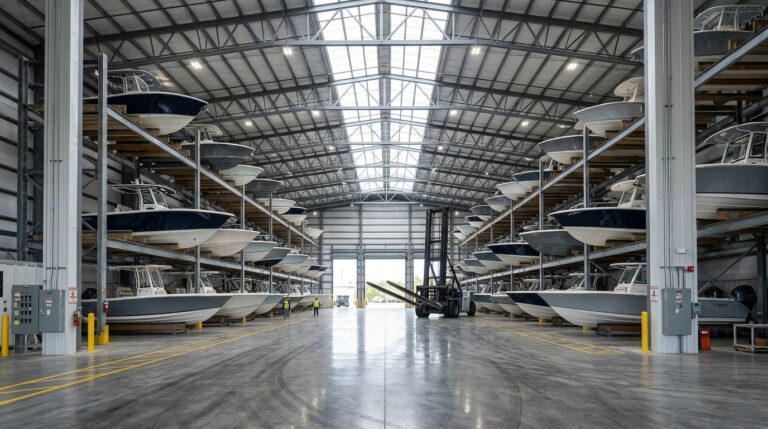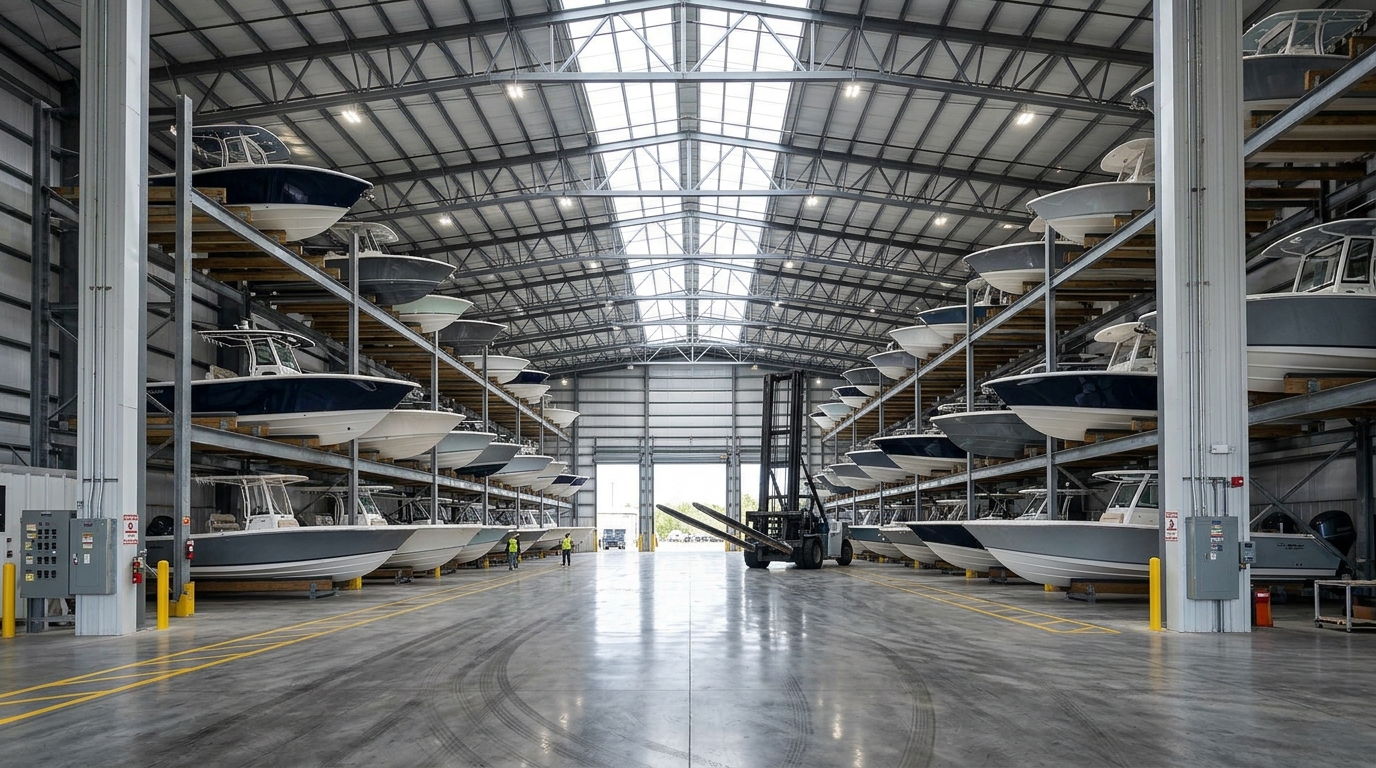
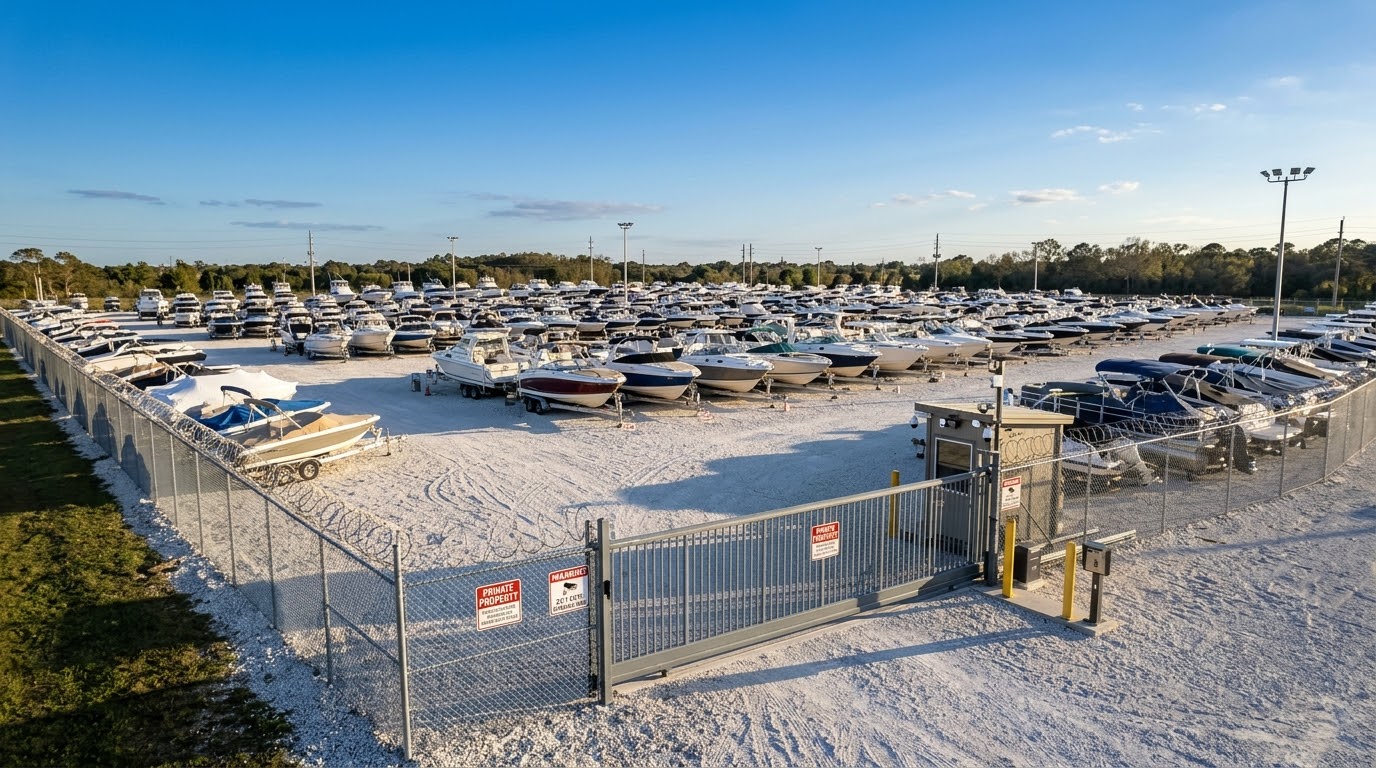
Selecting the right seasonal or year-round storage solution for your vessel often comes down to an essential calculation: balancing your monthly budget against long-term asset depreciation. When analyzing covered vs uncovered boat storage, boat owners must weigh the tangible cost savings of an open lot against the aggressive physical toll of solar UV degradation, rain intrusion, and freeze-thaw cycles.
Every dollar saved on an uncovered storage space can quickly be erased by the cost of gelcoat compounding, mold remediation, canvas restitching, and electrical corrosion. This authoritative covered vs uncovered boat storage guide provides an in-depth breakdown of pricing metrics, climate vulnerability factors, maintenance tradeoffs, and protective canopy strategies to help you choose the best storage tier for your vessel.
Financial Comparison: Covered vs Uncovered Boat Storage Costs
Monthly facility rates across North American marinas and self-storage facilities vary significantly depending on geographic location, coastal demand, and enclosure quality. Here is how nationwide pricing compares across storage categories:
| Storage Type | Average Monthly Cost (Per Foot) | Monthly Cost (24ft Boat) | Annual Expense | Primary Protection Provided |
|---|---|---|---|---|
| Uncovered Outdoor Lot | $4 – $10 / ft | $100 – $240 | $1,200 – $2,880 | Fenced perimeter, basic ground security |
| Covered Open-Sided Canopy | $10 – $18 / ft | $240 – $430 | $2,880 – $5,160 | Roof overhead blocks overhead sun, hail, and torrential downpours |
| Enclosed Garage Bay / Barn | $18 – $32 / ft | $430 – $770 | $5,160 – $9,240 | 100% barrier against UV rays, driving wind, pests, and frost |
| Indoor Heated Facility | $25 – $45 / ft | $600 – $1,080 | $7,200 – $12,960 | Climate-controlled 55°F thermal buffer, eliminates freeze risks |
For a standard 24-foot center console or bowrider, choosing covered vs uncovered boat storage represents an average cost difference of approximately $140 to $190 per month ($1,680 to $2,280 per year). While the initial savings of uncovered storage appear enticing, let us analyze the hidden maintenance costs that open exposure triggers.
The Impact of UV Radiation and Weathering
Solar radiation is the primary environmental adversary of marine fiberglass. Even when parked under a marine mooring cover, uncovered storage subjects your vessel to punishing ambient conditions:
- Gelcoat Chalking and Oxidation: Intense UV-A and UV-B photons break the chemical bonds within polyester resin. In uncovered lots, boat hulls suffer rapid loss of gloss, turning chalky and porous within 6 to 12 months. Professional rotary compounding and buffing to restore faded gelcoat averages $25 to $40 per linear foot ($600 to $960 annually).
- Marine Vinyl Desiccation: Ambient cabin heat under summer covers can exceed 130°F (54°C). This heat evaporates plasticizers from marine-grade upholstery vinyl, leading to stiffening, seam splitting, and brittle tears. Complete cockpit reupholstery can easily exceed $3,500 to $6,000.
- Cover Wear and Tear: High-denier polyester covers exposed continuously to wind flapping and beating sun deteriorate rapidly. Even premium Sunbrella canvas requires waterproof re-treatment every 18 months and seam re-stitching after three seasons of open exposure.
- Water Pooling and Mildew: Heavy rains create depressions in canvas covers. Pooled rainwater stretches fabric, breaches waterproof coatings, and floods cockpits, creating dark, damp breeding grounds for toxic black mildew.
Industry Data Benchmark
According to long-term marine depreciation surveys by the Boat Owners Association of The United States (BoatUS), powerboats kept continuously under covered or indoor storage retain up to 18% higher resale values over a five-year ownership cycle compared to identical vessels kept in open uncovered storage lots.
Covered Storage Configurations: Canopies vs High-Bay Carports
Covered boat storage facilities generally fall into two architectural categories:
- Open-Sided Steel Canopies: These structures feature heavy-gauge corrugated metal roofs supported by I-beams or structural steel tubing. They shield the boat from vertical rain, direct solar baking, and hailstones. Because the sides remain open, cross-ventilation is exceptional, virtually eliminating interior humidity buildup.
- Three-Sided Enclosed Bays: These structures incorporate a roof and three solid metal walls with an open forward access entry. They offer enhanced wind screening and prevent horizontal driving rain from striking boat topsides, offering near-indoor protection at a 30% lower rate than fully enclosed garage units.
How to Safely Store Your Boat Uncovered: Essential Protection Steps
If budgetary limits or marina availability dictate uncovered storage, implementing rigorous protective protocols will minimize cosmetic and structural depreciation:
Step-by-Step Checklist for Uncovered Storage
- Apply Heavy Ceramic or Polymer Sealant: Before placing your boat in the yard, apply a durable fluoropolymer sealant or marine ceramic coating to all gelcoat surfaces to reflect UV light.
- Install Anti-Pooling Support Poles: Ensure your canvas cover is tightly pitched using aluminum adjustable tent poles and strapping to allow rainwater and melting snow to run off freely without pooling.
- Position Solar Exhaust Vents: Install passive or solar-powered mushroom vents in the canvas to extract humid air and maintain continuous airflow through the cabin.
- Protect Trailer Tires from Ozone Damage: Fit opaque canvas UV wheel covers over all trailer tires. Sunlight causes rubber sidewalls to dry-rot within 24 months of outdoor parking.
- Remove Cockpit Cushions and Electronics: Store loose marine upholstery, life jackets, and expensive multi-function display (MFD) navigation units in a climate-controlled home garage or closet.
When Uncovered Storage Makes Practical Sense
While covered storage is superior from a maintenance standpoint, uncovered storage remains an effective, sensible strategy under specific operational conditions:
- Vessels Operating on a Short Turnover: If you use your boat 3 to 4 times weekly during peak summer, trailering to an uncovered lot close to the boat ramp saves valuable commute time and fuel.
- Winter Shrink Wrapping: During non-boating winter months, wrapping your vessel in professional 7-mil white shrink wrap creates a 100% waterproof sealed canopy. When shrink-wrapped, an uncovered lot provides identical protection to a covered canopy at half the storage cost.
- Aluminum Jon Boats and Skiffs: Durable, unpainted aluminum boats without complex marine electronics or luxury upholstery suffer negligible cosmetic depreciation from open sun and rain exposure.
Frequently Asked Questions About Covered vs Uncovered Boat Storage
Is covered boat storage worth the extra money?
Yes. For fiberglass powerboats and center consoles valued over $25,000, the $1,500 to $2,000 annual premium for covered storage pays for itself by preventing gelcoat oxidation, extending upholstery life by 5 to 7 years, and preserving thousands of dollars in resale value.
Does covered storage protect against winter freezing?
No. Standard covered boat storage structures have open sides and are unheated. You must still perform complete engine winterization, drain raw-water cooling systems, and flush domestic plumbing with marine antifreeze.
Can birds and insects damage boats in covered storage?
Yes. Metal overhead roof trusses are popular perching and nesting spots for pigeons, swallows, and mud daubers. Always keep your boat’s mooring cover tightly fastened even when parked underneath a covered canopy structure.
How much does it cost to shrink-wrap a boat for uncovered winter storage?
Professional mobile marine shrink-wrapping typically costs between $15 and $25 per linear foot ($360 to $600 for a 24-foot boat). This one-time seasonal expense turns an inexpensive outdoor lot into a completely weather-shielded enclosure.