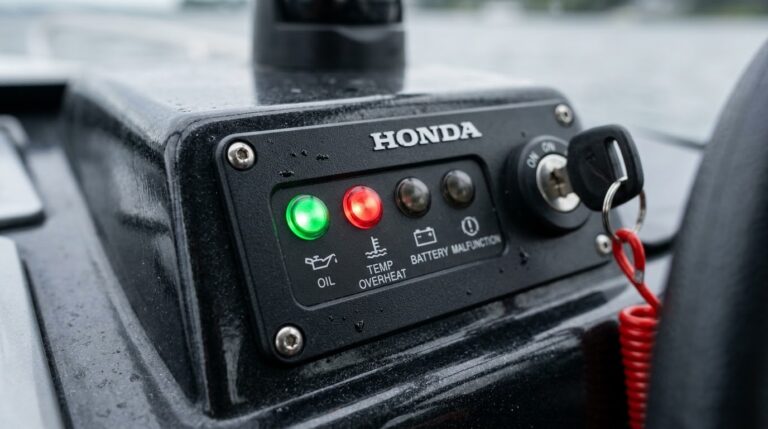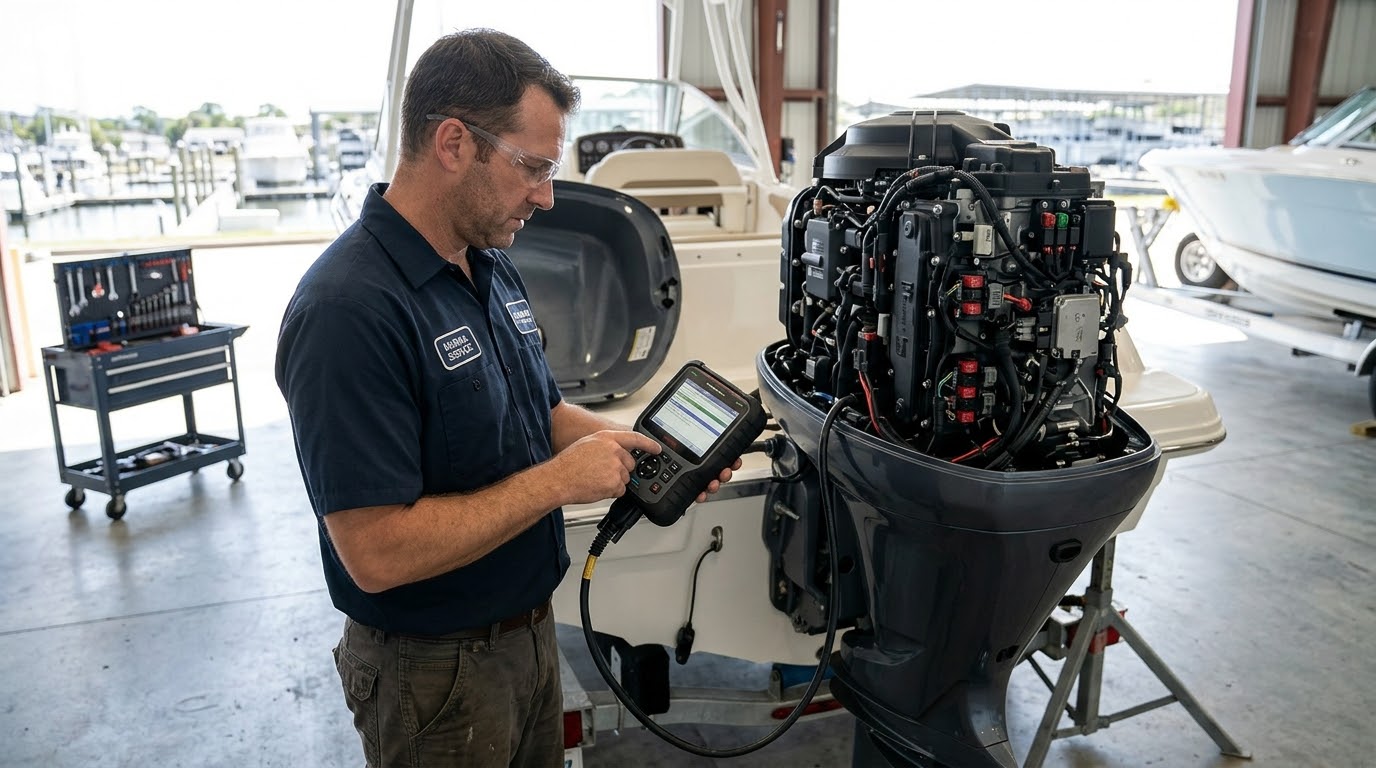
Renowned for their whisper-quiet operation, lean burn control technology, and maintenance-free self-adjusting timing chains, Suzuki FourStroke outboards have earned massive popularity among offshore anglers and commercial boaters alike. However, when an engine bogs down, triggers a persistent alarm buzzer, or refuses to turn over, methodical Suzuki outboard troubleshooting is essential to diagnose root mechanical faults quickly and accurately.
From portable DF20 models to flagship V6 DF300 and DF350 dual-prop powerhouses, executing disciplined Suzuki outboard troubleshooting helps boat captains decode diagnostic flash codes, resolve vapor separator tank (VST) fuel restrictions, fix neutral safety switch misalignments, and remedy cooling passage overheating.

Decoding Suzuki Outboard Diagnostic Flash Codes (Buzzer & LED)
Modern Suzuki EFI outboards incorporate an onboard engine diagnostic self-check system that communicates active fault codes through an audible under-dash warning buzzer and a flashing “CHECK ENGINE” lamp on the tachometer or digital gauge display. When performing Suzuki outboard troubleshooting, count the flash intervals (a long flash indicates tens, short flashes indicate single digits):
| Buzzer / Flash Code | Identified Sensor / Fault Circuit | Engine Guardian Reaction | Required Diagnostic & Repair Action |
|---|---|---|---|
| Code 2-1 (2 flash, pause, 1 flash) | Throttle Position Sensor (TPS) Fault | Rough idle, poor acceleration response | Inspect TPS harness connector; verify 0.5V closed throttle signal on multimeter |
| Code 2-4 (2 flash, pause, 4 flash) | Camshaft Position Sensor (CMP) | Extended cranking; intermittent misfire | Check sensor magnetic face for metal shavings; test resistance or replace sensor |
| Code 3-1 (3 flash, pause, 1 flash) | Manifold Absolute Pressure (MAP) Sensor | Engine runs rich; black exhaust soot | Inspect small rubber vacuum hose from intake manifold to MAP sensor for splits |
| Code 4-2 (4 flash, pause, 2 flash) | Crankshaft Position (CKP) Sensor | Engine cuts out completely; no spark | Check air gap to flywheel reluctor ring; replace failed CKP sensor |
| Code 1-4 or Continuous Alarm | Cylinder Head Temperature Overheat | Guardian limits RPM to 2,000 RPM idle | Shut down immediately. Inspect water pump impeller, clean telltale, flush salt passages |
Starting Issues & The White Ignition Wire Check
One of the most famous quirks uncovered during Suzuki outboard troubleshooting on DF models is the dedicated “white sub-battery wire”. Unlike many outboard brands that feed ECM ignition power through the main battery cables, Suzuki utilizes an independent small 14 AWG white wire with an inline 30-amp blade fuse directly connected to the battery positive terminal.
- Corroded White Wire Fuse Holder: If this inline fuse holder develops green copper corrosion or blows, the starter motor will still crank the engine powerfully, but the ECM receives zero voltage. As a result, the fuel injectors and direct ignition coils will never fire.
- Neutral Safety Switch Misalignment: Suzuki side-mount binnacles contain a delicate neutral safety switch. If the remote throttle cable has stretched by even 1/8 inch, the mechanical cam fails to depress the neutral switch, resulting in a completely silent starter motor. Always wiggle the throttle handle in neutral while turning the key.
Vapor Separator Tank (VST) & Low-Pressure Fuel Clogs
Ethanol fuel degradation is the number one cause of mid-range bogging on Suzuki outboards. If your engine starts easily and idles smoothly, but bogs down, surges, or cuts power above 3,500 RPM, systematic Suzuki outboard troubleshooting points to fuel flow starvation:
- Low-Pressure Lift Pump: Mechanical diaphragm fuel pumps (or secondary electric lift pumps on larger V6 models) pull fuel from the boat gas tank into the VST. Squeeze your fuel primer bulb while the engine bogs. If pumping the bulb manually eliminates the bog and restores engine power, the low-pressure lift pump diaphragm has pinholes and requires replacement.
- High-Pressure VST Inlet Filter: Inside the aluminum VST chamber, the high-pressure fuel pump draws fuel through an ultra-fine mesh thimble filter. Varnish deposits from stale fuel dry out into microscopic gummy flakes that coat this filter. Disassemble the VST, discard the old paper or mesh pickup basket, spray the chamber clean with aerosol cleaner, and always install a fresh OEM VST tank gasket.
Cooling System: Impeller & Thermostat Inspection
Overheating issues on Suzuki engines usually stem from salt crystallization or worn rubber impeller vanes. Suzuki recommends replacing the water pump impeller every 100 hours or 12 months. When servicing cooling passages:
- Inspect the water pump stainless steel liner cup for circular scoring. Scored metal reduces water suction pressure dramatically.
- Remove the two 10mm bolts holding the thermostat housing on the top aft of the cylinder block. Submerge the thermostat in a pot of water on the stove with a cooking thermometer; it should begin opening smoothly at approximately 140°F (60°C).
- Follow certified protocols published by Suzuki Marine Official Maintenance.
Compare diagnostic procedures across manufacturers by consulting our comprehensive outboard motor troubleshooting guide, our brand-specific Yamaha outboard troubleshooting guide, and our Mercury outboard troubleshooting guide.
Frequently Asked Questions About Suzuki Outboard Troubleshooting
How do I reset the oil change reminder buzzer on a Suzuki outboard?
Every 100 engine hours, Suzuki outboards trigger a reminder horn (one short beep every 3 seconds) with a flashing oil icon. To reset the reminder without a dealer computer: turn the ignition key to ON (engine off). Pull out the red emergency kill switch lock clip. Pull the kill switch button outward 3 times within 10 seconds. You will hear a confirmation beep indicating the timer is reset to zero.
Why does my Suzuki outboard die immediately when shifted into gear?
This is commonly caused by a sticking shift cut sensor or a stretched mechanical shift cable. When shifting into forward or reverse, the engine briefly interrupts ignition for a fraction of a second to relieve dog clutch pressure in the lower unit. If the shift sensor switch sticks in the activated position, it cuts ignition permanently, causing the engine to stall.
What causes a Suzuki outboard telltale stream to stop flowing?
The telltale outlet nozzle on Suzuki engines is relatively small and easily blocked by dried salt residue, sand, or mud-dauber insect nests. Take a piece of stiff weed-whacker monofilament line or soft copper wire and gently probe up into the rubber telltale nozzle while the engine idles on the hose to dislodge blockages.
Can low battery voltage trigger false sensor error codes on a Suzuki?
Yes. Suzuki ECM microprocessors require a steady 10.5+ volts during cranking. If your marine starting battery is weak or terminals have resistive corrosion, battery voltage drops during cranking, triggering false TPS, MAP, or CMP sensor error flash codes. Test battery health following our marine battery care guide.
Published by Boat Maintenance Guide Certified Marine Mechanics Desk. Inspected in accordance with Suzuki Marine FourStroke Service Manuals and ABYC safety specifications.